





Zhejiang University of Technology's AI+SOP Operational Behavior Analysis Debuts at the 27th Yuyao Plastics Expo
Zhejiang University of Technology's AI+SOP Operational Behavior Analysis Debuts at the 27th Yuyao Plastics Expo
From "Is the machine running?" to "Is the person following the standards?"
From November 3rd to 6th, 2026, the 2026 China (Yuyao) International Plastics Expo and the 27th China Plastics Expo were held at the Yuyao Zhongsu International Convention and Exhibition Center. Themed "Innovation Empowers the Industry, Green Leads the Sector", this edition of the Plastics Expo utilized 8 exhibition halls, covering an exhibition area of 42,000 square meters, with 2,000 standard booths, and featured the presence of over 500 enterprises. Zhejiang University of Technology (ZUT) demonstrated a joint solution combining injection molding MES and AI+SOP operation behavior analysis on site, addressing a question not yet fully covered by MES: beyond equipment data, can human operational actions also be turned into traceable and manageable data.
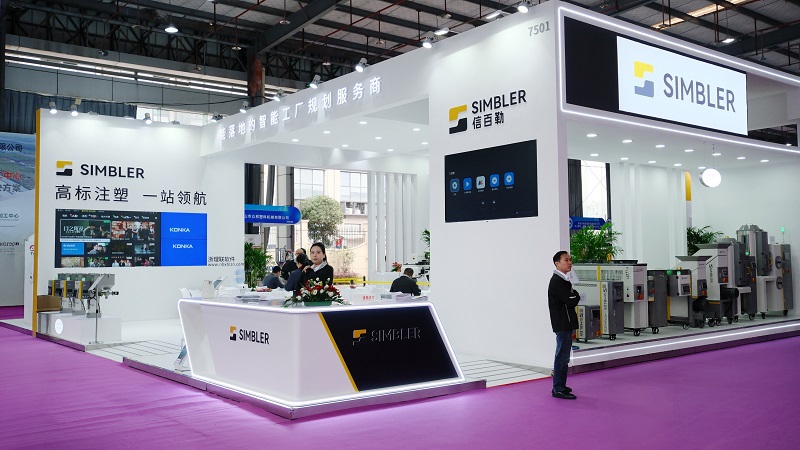
On-site observation: The industry is shifting its question
Three years ago, the bosses of injection molding factories we contacted asked most frequently: "Can the system be connected to my machine? Can it automatically generate production output?"
This year, more frequently asked is another question: "My system can already track production output, but can it also track the people behind the output?"
This is an intuitive impression Zhejiang University of Technology gained from the exchange at the booth. Although the sample is limited, the direction is clear: the digitization of the injection molding industry is undergoing a second leap.
The first leap was to connect the machine to the internet. Whether the equipment is turned on, how many molds have been run, and what the yield rate is, all these have shifted from verbal reports to real-time data. This initiative has been implemented in the industry for seven or eight years, and it has been basically successful in many factories.
The second leap is to turn "how humans operate" into data as well. With the same machine, the same process, and the same batch of materials, if a different person is doing the work, the yield rate will be different - this remains a black box to this day.
The two solutions brought by Zhejiang University of Technology this time correspond to these two transitions: the injection molding MES is responsible for enabling machines to communicate, while the AI SOP operation behavior analysis is responsible for enabling actions to communicate.
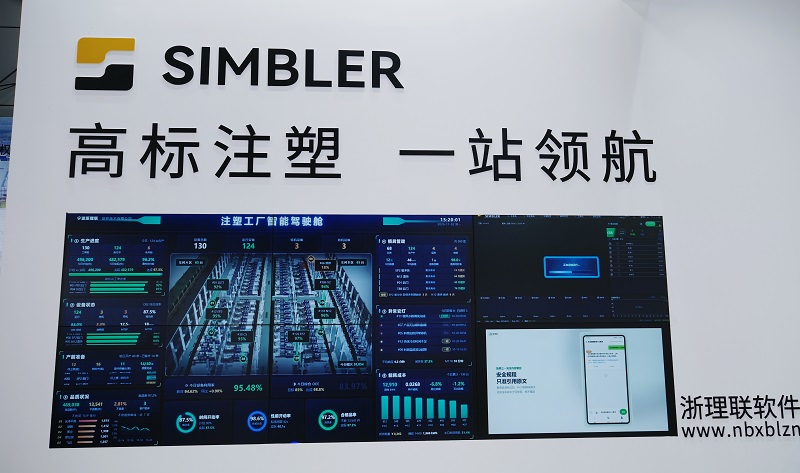
MES as a foundation: the workshop must first be "visible"
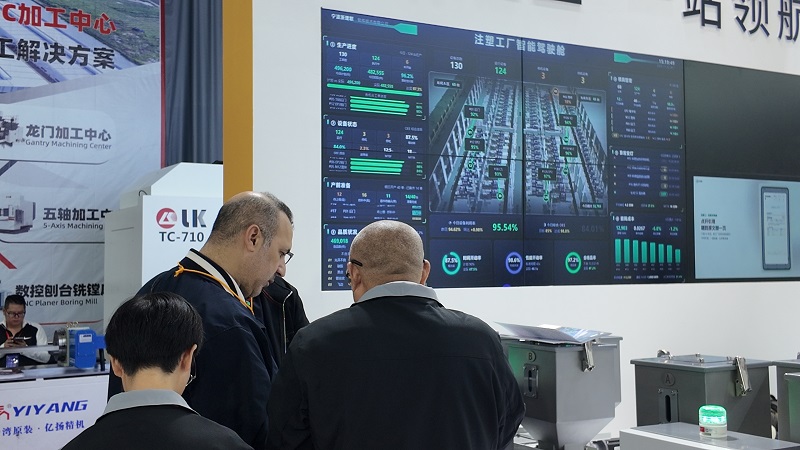
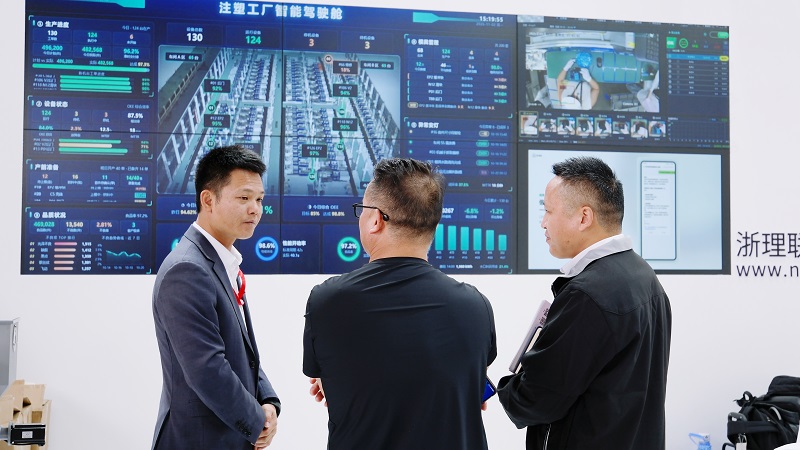
For AI to have something to analyze, the premise is that there is already a stable data foundation on site. This is also part of the reason why Zhejiang University of Technology's Injection Molding MES has been continuously implemented in multiple injection molding factories in recent years. At the exhibition, a complete demonstration of the entire process from receiving orders to warehousing for a production line was presented on a large screen.
Equipment layer: After the machines are networked, real-time data is collected for startup, shutdown, idle running, material waiting, and machine adjustment states; OEE is automatically decomposed into time utilization rate, performance utilization rate, and yield rate, making it easy to identify which segment is leaking.
Planning layer: When arranging production and assigning work hours, the system automatically suggests recommended machines and estimated completion times based on mold status, machine capacity, and current workload.
Execution layer: Work orders are bound to machine networking, with real-time progress tracking; the system provides early warnings for over-commitment, under-commitment, and delays.
Quality layer: The initial inspection, in-process inspection, and final inspection are all conducted through paperless entry. If the data exceeds the process window, an automatic warning will be triggered. Additionally, data can be sliced arbitrarily based on machine, mold, shift, and raw material batch.
Tracing layer: Each box of finished products is bound with comprehensive data covering "human, machine, material, method, environment, and testing". By scanning a box code, the complete archive of this batch of products can be retrieved, and any suspicious products in the same batch can be locked down simultaneously.
After completing these five layers, most of the judgments in the workshop shifted from "based on experience" to "based on data". But there is still one layer where data cannot be seen.
AI+SOP behavior analysis: Turning "actions" into verifiable data
The quality issues in the injection molding workshop often stem not from the machines but from human actions. For instance, only three of the four required locating pins are installed; parameters are adjusted by hand during machine tuning and not recorded in the system; and the initial inspection is not conducted in the order of "appearance - dimensions", resulting in missed defects. These issues only occur in human actions and cannot be captured by MES.
Zhejiang University of Technology's AI SOP operation behavior analysis utilizes industrial cameras and visual algorithms to convert such actions into data. Its core capabilities lie in three aspects:
1. Compliance inspection of process timing: Compare actual operations with preset SOP steps, and immediately alert for skipped steps, reversed sequences, or omissions.
2. Hand region and trajectory recognition: Recognize the action of the hand entering dangerous areas such as the mold parting surface, trigger an immediate alarm, and notify the team leader; if it is necessary to interlock with the equipment to pause its operation, it should be configured separately according to factory safety specifications.
3. Determination of key action execution: It's not just about whether it's done, but also about whether it's done properly. For example, whether the insert is placed flatly and whether the pressing plate is pressed in order.
The biggest difference between this solution and other visual applications lies in its deep integration with MES. Most visual solutions only stop at generating alarms and end after reviewing the videos; however, in this case, the alarms are fed back to MES, linked to specific work orders, batches, and personnel skill profiles, and become references for the next production scheduling and training. Alarms are no longer just a video to be searched afterwards, but have entered the closed-loop production management system.
Note: The aforementioned recognition capability is based on engineering practice. The actual accuracy is affected by factors such as lighting conditions at the workstation, obstruction, machine layout, and the granularity of SOPs. The final assessment should be based on on-site deployment. Regarding the collection and use of personnel operation data, authorization should be obtained in accordance with enterprise management systems and relevant requirements for personal information protection.
A mold change scenario, to see how two systems cooperate
Take mold change, which is the most typical and prone to problems in injection molding factories, as an example.
Mold change initiation: MES triggers the task, automatically retrieving the target machine and standard labor hours; AI SOP identifies the starting point of the action and initiates step verification.
Dismantling old and installing new molds: MES records the time of dismantling and installing; AI SOP verifies the quantity of locating pins and the sequence of pressing plate fastening.
Parameter confirmation: MES compares current parameters with the process card; AI SOP verifies machine adjustment actions and manual parameter modification behaviors.
First article inspection: MES enters data to determine whether to release; AI SOP verifies whether the first inspection is performed in accordance with the SOP sequence.
Mold change completion: MES calculates the total duration and compares it with standard working hours; AI SOP outputs a compliance report for the actions.
The result is no longer just a number like "this mold change took 47 minutes", but can be broken down into: machine action 31 minutes, waiting 9 minutes, and rework and reinstallation 7 minutes; the reason for the rework and reinstallation is the omission of checking the locating pin in step 3. This is the data that can be improved. (The above duration is example data, used only to illustrate the breakdown method.)
Why is Zhejiang University of Technology doing this
The injection molding workshop is neither a standard assembly line nor a purely process-oriented industry, but a hybrid scenario characterized by "strong equipment correlation and strong human intervention". To achieve this, three prerequisites are required.
Only by understanding the process can standards be defined. Judgments such as "parts in place" and "mold pressed" cannot be learned through general modeling. Standards must be written by those who understand injection molding. The core team of Zhejiang University of Technology has accumulated more than 15 years of experience in injection molding production management and software services, and participated as the main drafting unit in the formulation of the group standard for "Construction Specification for Digital Factory Information Management Platform in Injection Molding Industry".
Deep integration generates value. Behavior recognition must be bound to work orders, batches, and machines. Zhejiang University of Technology itself has a mature injection molding MES, and AI is a module built on the MES, rather than an independent plug-in.
"Accompanying the implementation process brings us closer to reality. Each factory has different SOPs and machine positions. Zhejiang University of Technology provides one-on-one implementation services, from workstation selection, camera installation to threshold tuning, tailored to the actual process of the factory.".
Exhibition site: Three demonstrations that can be seen and tried
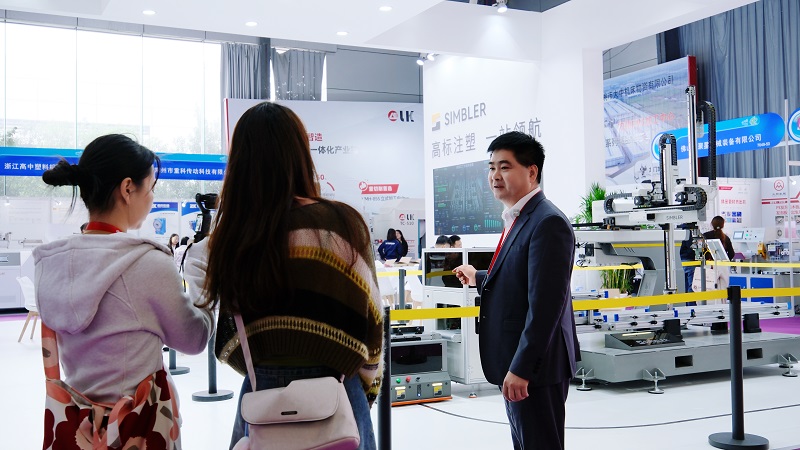
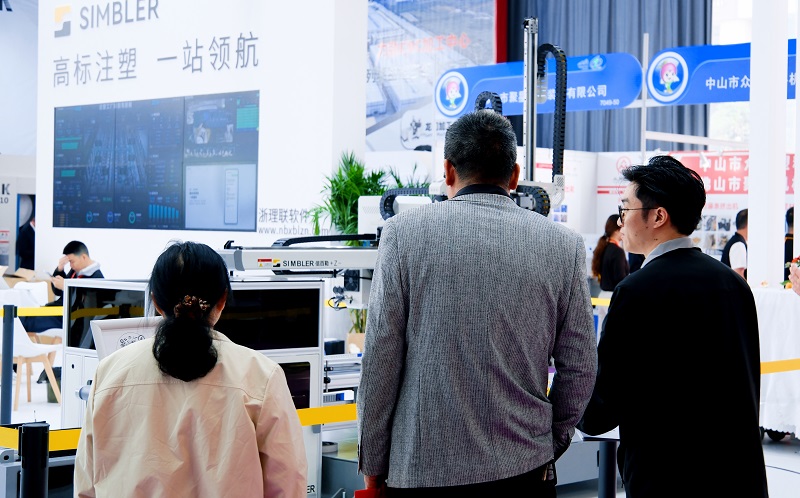
During this year's Plastics Expo (from November 3rd to 6th), Zhejiang University of Technology set up three demonstrations for hands-on experience at their booth.
1. Kanban real machine demonstration: Using desensitized real production line data, walk through the complete process from production scheduling to traceability.
2. AI action recognition demonstration: Perform standard and violating actions on site, and see how the system determines and alerts in real time.
3. Sample compliance report: Review a mold change action analysis report to see where the time loss actually occurs.
If you already have MES but still feel that "the data is there, but the problem persists", please contact Zhejiang University of Technology and move this demonstration to your workshop for an on-site evaluation.
Most factories don't know what to do, but they don't know if they have done it. SOPs are posted beside the machines, and training has been conducted, but no one can tell how much has been achieved when changing personnel to rush orders. MES solves the problem of "whether the machines are running", while AI SOP solves the problem of "whether people are following the standards". Combining the two things, the workshop can be truly transparent.
Zhejiang University of Technology uses data to speak and manage.